Travel Blog
Cambodia, March 2026
The Khmer civilisation from the 9th to the 14th centuries, based around what is now Cambodia, must have been among the greatest in the world . No written records remain other than stone inscriptions, the testament is preserved in the glory that is the Ankor complex. But that shouldn’t be your only reason to come and stay for a while.
Cambodia had a tumultuous 20th Century; French colonialism, the spill-over from the American War in Vietnam, the Khmer Rouge’s brutal attempt at agrarian communism in the 1970s which killed 2m people, around a quarter of the entire population, and the Cambodian-Vietnamese war which didn’t end until 1989. The Khmer Rouge also decimated the educated and professional classes, something that has held back the development of Cambodia to this day. The country remains one of the poorest in the world.
But, despite all this, the people we met on our brief travels were universally kind, peaceful and welcoming. The sights we saw were colourful and interesting.
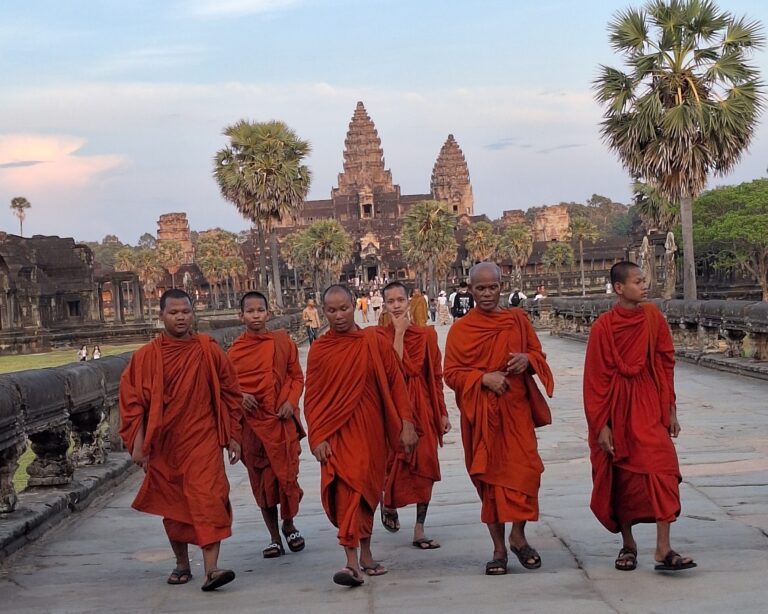
Angkor Wat
Angkor Wat is a short tuk-tuk ride from the city of Siem Reap where you can fly in to and where pretty much all the tourist accommodation is. On our modest budget we stayed at the Central Blanche Residence - £10 a night, including a swimming pool. The Angkor Hand-Pulled Noodles restaurant in town was cheap and tasty.
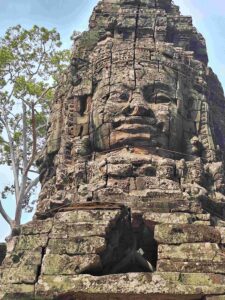
My pictures simply do not do justice to the magnificence that is Angkor Wat, the most famous of the many temples. It was built in the 1100s, at a time when medieval Europe was starting to construct relatively crude stone castles. It was abandoned in the 15th Century and only reclaimed from the jungle in the 20th Century.
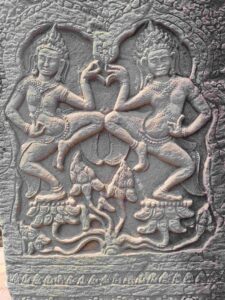
Sculptures and carvings
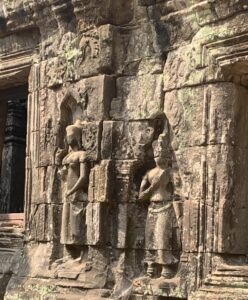
The temples and processional walkways are covered in carvings of exceptionally high quality telling stories of battles between gods and demons and about heaven and hell.
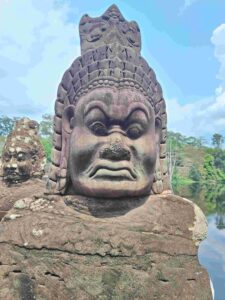
Surrounding temples
Angkor Wat is only one of 72 major temples in the wider complex which is spread over 400km2. We bought a 3 -day temple pass ($60} to use on a 2-day guided tour - definitely worth having a guide. We went back to Angkor Wat by ourselves to make use of the 3rd day of the pass at our own pace.
Unbelievably, with our social media tuned short attention-span lives, 'temple fatigue' can set in. If you can spread your visit over a longer time that can help with appreciating the grandeur of it all and in visiting the more outlying temples.
Hero Rats
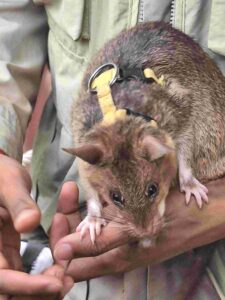
The Apopo Hero Rats centre in Siem Reap is home to African giant pouched rats that are trained to detect landmines which are still prevalent on the Cambodia / Thailand border. Definitely worth a visit.
Cambodia Wildlife Sanctuary
We spent a week volunteering (contribution of $400pp towards accommodation, food, transport, etc) at the Cambodia Wildlife Sanctuary which is on a large reserve a couple of hours north of Siem Reap.
Together with 3 other volunteers we helped with foraging for elephant food (Sugar Cane, Banana Tree, Elephant Grass), cleaning animal enclosures and also teaching local children. A great experience.
Battambang
A sleepy city a couple of hours from Siem Reap. A one day guided tour can fit in the main tourist sights: - Temples, 'Killing' Cave, Bamboo train and Bat Cave but there are other bits to explore.
Bat Caves - Battambang
At dusk millions of Asian Wrinkle-Lipped Free-Tailed bats emerge from the caves at Phnom Sampeau. Because they are so small and so numerous it's quite tricky to see them, it's more a sensation of a swarm.
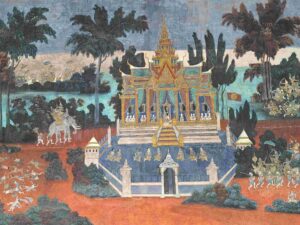
Royal Palace - Phnom Peng
Phnom Peng, the captal of Cambodia was evacuated by the Khymer Rouge in the 1970s as part of their brutal strategy to control the population. It's now a bustling city of 2.5 million people. The Royal Palace and the National Museum were points of interest. Shout out to the Little Susie Bar where they try to have live music most nights.
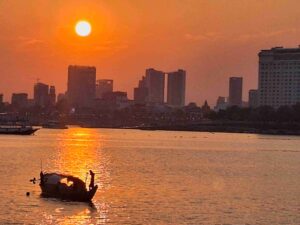
Sunset on the Mekong River - Phnom Peng
A sunset river trip is a good photo opportunity. I was pleased with this one.
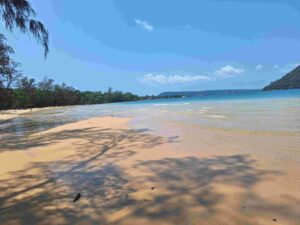
M'Pai Bai - Koh Rong Sanloem
We didn't initially put together tropical islands and Cambodia, but Koh Rong and the quieter Koh Rong Sanloem that we chose were a piece of paradise. Reached by regular speedboats from Shianoukville we stayed at M'Pai Bai, a small fishing village with an engaging community of ex-pats and locals. Nothing polished, a laid-back backpacker vibe. Pork Rice at Win Win's for breakfast, mango smoothies beachside, swimming in a sea as hot as a warm bath and dinner at a variety of small, informal cafes, all within a few minutes walk, filled our days. .
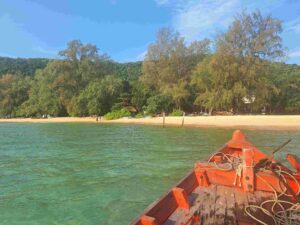
Sunset Bay - Koh Rong Sanloem
An excursion snorkelling on a coral reef, fishing, visiting Sunset Bay and magical night-swimming with bio-luminescent plankton back at M'Pai Bay was as energetic as we needed to get,
Eating Out
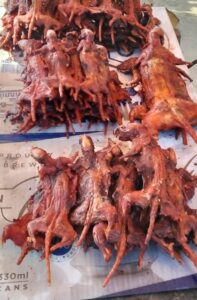
Pretty much anything is on the menu in Cambodia, from insects to the fallopian tubes of various animals. Here we have some spatchcock rats. Yum.
Practicalities
If you are a UK citizen, to get into Cambodia you’ll need a e-visa, simply obtained online for $30 to stay for 30 days.
We had hot and sunny weather the whole month. It was getting hot in March so you might want to go a month or two earlier to stay a little cooler.
Tourism hasn’t seemed to have fully recovered since Covid, so it was pretty easy to arrange stuff as we were going along.
Homestays and hotels can be booked on AirBnB, Agoda and Booking.com. Get rooms with air-con wherever you can.
Download an e-sim for your phone from Airlo for doom-scrolling and to make calls using WhatsApp.
Organise long-distance coach travel using the 12Go website. For local transport use the Grab App to order Tuk-Tuks (or Remorques which are a bigger versions for more people / luggage). There price is set upfront and paid by card so there’s no haggling.
There are 2 official currencies; Cambodian Riels and US Dollars (easy to withdraw from cashpoints in cities, pretty much universally accepted with a fixed exchange rate), and a 3rd unofficial currency – Cambodia Beer ring-pulls. We had a win rate better than 1 in 3 so amassed a small collection. Prizes of a free can, one dollar and two dollars can be exchanged for anything in small shops. Credit Cards are much less likely to be accepted in the type of budget establishments we frequented.
Only bottled water is drunk / used to make ice. We also carried around some hand-sanitizer and fortunately didn’t get sick at all.
There were some mozzies about – but not many at this time of year. Accommodation will have over-bed nets where this is needed. Bugs didn’t seem very interested in us, but a tube of hydro-cortizone is useful to have to stop any itching.
There is quite a bit of plastic packaging and other rubbish road-side. The landscape has also been heavily de-forested. From asking around it just doesn’t seem to be ingrained in the culture to look after the environment. With mass-murder, war, starvation and limited education only a generation distant and subsistence living for much of the population today this is perhaps not surprising.
We felt safe everywhere we went including in more remote areas and later at night. Local people were kind and welcoming. We had a great month in Cambodia and wouldn’t hesitate to return.